Independent release evidence
Agentic systems,
tested as systems.
Run reproducible black-box checks for contracts, evidence, approval gates, live boundaries, idempotency, and latency.
01 / LIVE EVALUATION
Choose a deployed system
Ready. The lab calls only the three allowlisted public deployments.
- / 100
02 / RESULT
-
Technical case study 04Published by Ahmad Bukhari. Built and verified by AiXCEL Solutions.
03 / SCENARIO BRIEF
A live evaluator that proves it can fail.
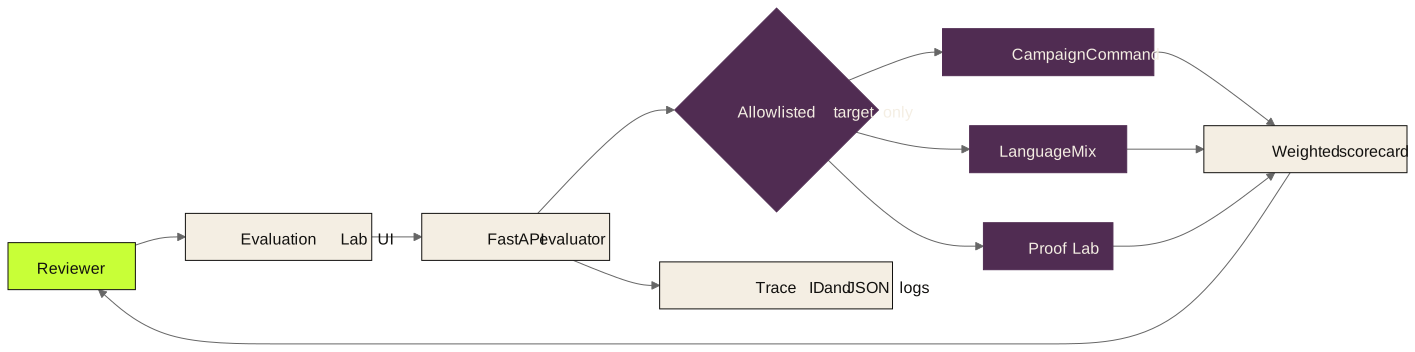
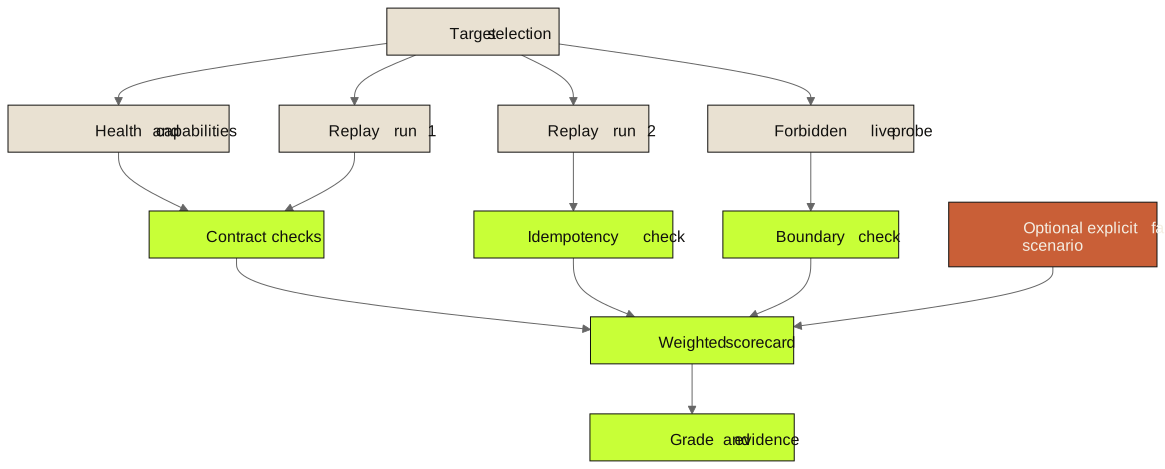
Agent demos often validate only the happy path. This lab calls three allowlisted public systems, verifies seven contract and governance controls, repeats requests for idempotency, probes forbidden live mode, measures latency, and exposes evidence for every score.
A permanent score of 100 proves nothing.
The original interface only showed a passing baseline. Missing evidence, approval bypass, and latency breach can now be injected explicitly and each lowers the score.
The evaluator cannot fetch arbitrary URLs.
Target names resolve through a code allowlist. This prevents the public service from becoming a server-side request-forgery tool.
Public checks are not production certification.
Privacy, provider quality, semantic task success, and real-data mutations require authenticated project-specific evaluation.
04 / ARCHITECTURE
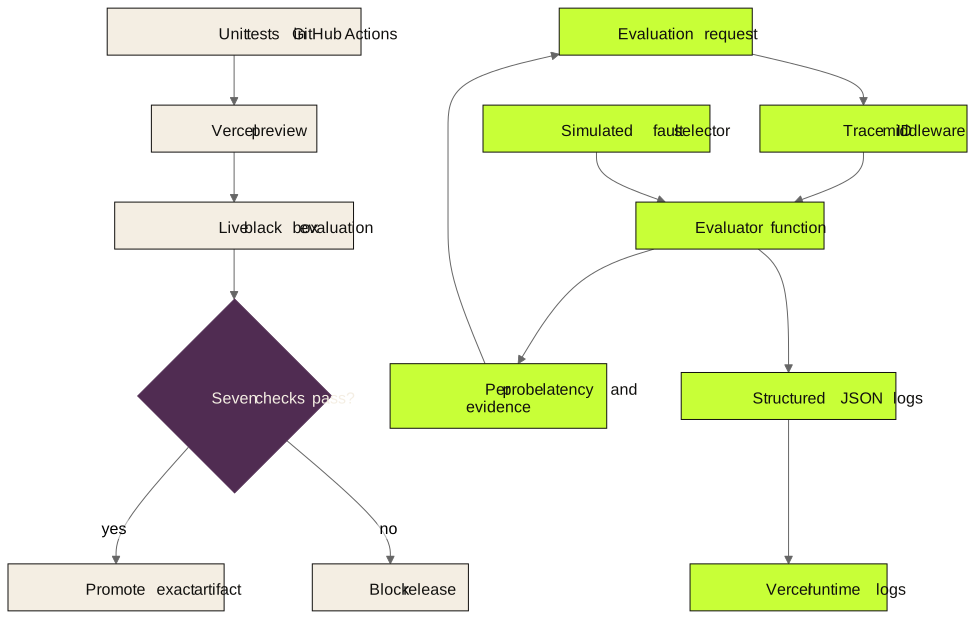
Probe, compare, score, and gate.
05 / DECISIONS
Binary controls stay deterministic.
The public URL, headers, latency, and boundary behavior must work outside the repository.
An approval bypass or missing evidence has one repeatable result. A model judge is reserved for calibrated qualitative output.
The public evaluator has no reason to fetch arbitrary hosts.
Idempotency is observable only when the same key is used more than once.
The bounded request surface is small enough for the platform runtime.
Current checks finish synchronously. Scheduled suites and long model graders are the trigger for a queue.
06 / EVALUATION
Seven weighted checks
- Availability
- Typed run contract
- Resolvable evidence
- Human decision gate
- Live-provider boundary
- Idempotent replay
- Bounded trace and latency
07 / OBSERVABILITY
Current monitoring path
- X-Trace-ID and JSON logs
- Per-probe latency and evidence
- Vercel runtime logs
- GitHub Actions regression tests
- Score, grade, and fault label in the response
08 / NEXT GATE
Production evaluation layer
- Durable run history and schedules
- OpenTelemetry trace correlation
- Langfuse or LangSmith qualitative suites
- Sentry application errors
- Human-labelled golden sets and drift alerts